


Mandap Decoration for an Algarve Wedding
A mandap set against the Algarve’s soft coastal light can feel both profoundly traditional and entirely your own. Mandap decoration for Algarve wedding celebrations is not about placing a beautiful structure in a beautiful location. It is about creating the sacred focal point for your vows while respecting your heritage, your personalities and the practical realities of an outdoor destination celebration.
Whether you imagine vibrant florals beside the sea, a refined all-white ceremony in a historic quinta, or an intimate setting beneath ancient olive trees, the most memorable mandaps belong to their surroundings without losing their cultural meaning.
Begin with the ceremony, not the colour palette
A mandap has a purpose beyond its visual impact. It frames the rituals, brings families together around the sacred fire and creates the setting in which you make your promises to one another. Before choosing flowers, fabrics or furniture, consider how your ceremony will unfold.
Will you be hosting a traditional Hindu ceremony with an Agni Kund, specific entrances and space for close family? Are you blending rituals from different faiths or cultures? Perhaps you would like a shorter, more personal ceremony that honours selected traditions while welcoming guests who are experiencing them for the first time. These choices influence the scale, layout and decoration of the mandap.
A thoughtful design leaves enough room for the priest, the couple and the meaningful moments around the fire, while ensuring guests can see and hear clearly. It should also allow photographers to capture the emotion without turning the ceremony into a stage set. Beauty matters, but comfort, movement and reverence matter just as much.
Mandap decoration for Algarve wedding venues
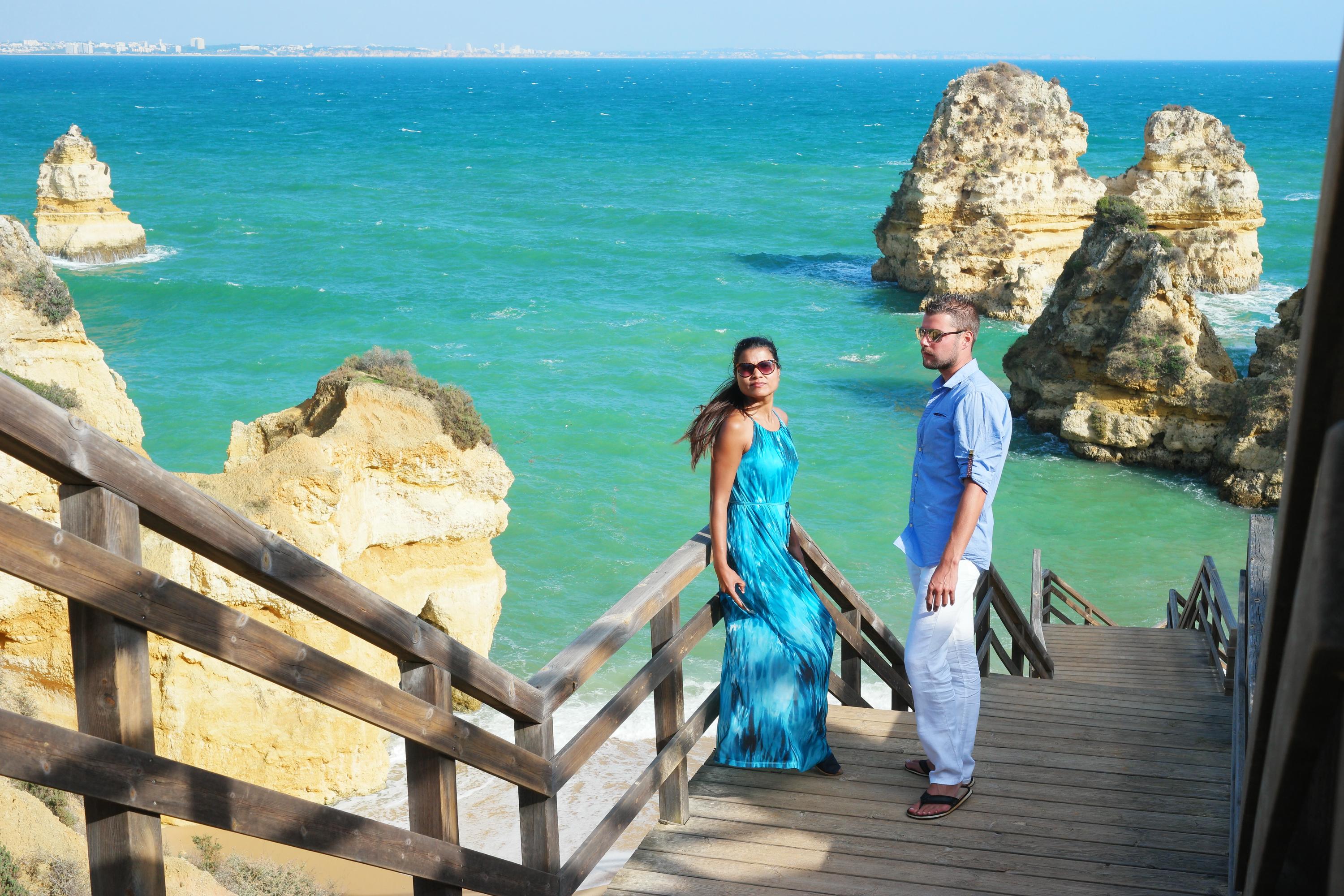
The Algarve offers remarkable contrast in a relatively small area. A clifftop venue near Lagos brings expansive sea views and brisk coastal breezes. A private villa in Quinta do Lago may suit a polished, contemporary celebration. In Tavira or Lagoa, a garden, courtyard or rustic estate can lend a quieter, more romantic atmosphere. Each setting calls for a different approach.
Coastal mandaps: let the view breathe
For a ceremony overlooking the Atlantic, less can often achieve more. A heavy floral wall may compete with the horizon, while a considered four-post mandap dressed in flowing fabric, sculptural floral arrangements and soft metallic details can frame the sea beautifully. Ivory, blush, pale peach, dusty blue and muted gold work particularly well in bright Portuguese sunlight.
The trade-off is exposure. Wind is a genuine consideration on the coast, especially for lightweight draping, delicate hanging décor and open flames. Fabrics need to be secured discreetly, florals must be stable, and the Agni Kund requires a safe, venue-approved position. A contingency plan is not pessimistic planning - it is what allows everyone to remain calm if the weather changes.
Quintas and gardens: build an immersive setting
A quinta or garden venue can support a more layered mandap design. Think marigolds and warm saffron tones against terracotta walls, pathways lined with lanterns, or a floral aisle that leads guests through citrus trees towards the ceremony. These venues suit celebrations that feel richly personal, particularly when the mandap décor is echoed in the welcome area, seating and evening reception.
However, a garden should still feel like a garden. Rather than filling every space, select a few areas for impact: the entrance, the aisle, the mandap and the couple’s seating. This gives the design a clear rhythm and keeps the experience elegant rather than overcrowded.
Modern villas and terraces: use structure with intention
Clean-lined villas can be the perfect canvas for a contemporary mandap. Acrylic elements, mirrored plinths, monochrome flowers, candlelight and architectural frames can create a striking contrast with the Algarve landscape. This is often a beautiful choice for couples bringing together Indian ceremony traditions with a modern European aesthetic.
In these settings, proportion is everything. An oversized structure can overwhelm a terrace, while a mandap that is too small may feel lost in wide-open surroundings. Site measurements, guest numbers and ceremony seating must guide the design from the beginning.
Choose materials that feel beautiful from morning to sunset
An Algarve wedding day may begin in bright sunshine and end under a clear, star-filled sky. Your mandap decoration should look considered in both conditions. Fresh florals bring scent, softness and romance, but they need careful selection in warmer weather. Seasonal or heat-tolerant blooms can hold their shape more reliably than fragile varieties, particularly for an afternoon ceremony.
Fabric transforms a simple frame, but its weight and movement should suit the venue. Chiffon can look wonderfully light by the sea, provided it is properly secured. Richer textiles, embroidery and layered drapes create a more traditional feel and are often especially effective for evening or indoor ceremonies.
Lighting deserves the same attention as flowers. During daylight, it may be almost invisible. As the sun lowers, warm uplighting, lanterns and carefully placed candles can make the mandap feel intimate without distracting from the rituals. If the ceremony is later in the day, discuss photography timings and lighting requirements early so that nothing feels hurried.
Make tradition visible in a way that feels like you
There is no single correct mandap style for an Indian destination wedding. Some couples want a joyful riot of colour, with marigolds, roses and jewel-toned textiles reflecting family traditions. Others prefer a softer interpretation: neutral flowers, antique gold accents and a few meaningful ceremonial details. Both can be authentic when the design is rooted in what matters to you.
Personal touches might appear in the colours chosen to honour a family tradition, the textiles used beneath the mandap, floral varieties that recall a parent’s wedding, or the way the space is arranged for a particular ritual. For couples blending cultures, the mandap can become a graceful meeting point rather than a compromise. A Western aisle entrance, readings from loved ones, music that moves between traditions or vows written together can sit naturally alongside Hindu ceremony rites.
For LGBTQ couples, the same principle applies: your ceremony should never be fitted into someone else’s template. The mandap can be traditional, reimagined or entirely contemporary, while still holding the symbolism and sense of occasion you want to share with your guests.
Plan the practical details early
The most effortless-looking ceremonies are carefully organised behind the scenes. A beautiful mandap needs to be compatible with venue rules, set-up access, local weather, ceremony timings and the work of several suppliers. This is especially relevant when guests are arriving from different countries and the wedding includes multiple events.
Discuss the ceremony location before confirming a design. Check where vehicles can unload, how far décor must be carried, whether there is shade for florists and suppliers, and what time the venue permits set-up. Ask how the structure will be anchored without damaging lawns, terraces or historic surfaces. If a fire ceremony is planned, confirm all safety requirements and whether additional equipment is needed.
It also helps to consider the guest experience. Elderly relatives may need shade and easy access. A long ceremony in direct sun may call for parasols, water and well-timed seating. If the ceremony is held on grass or sand, suitable flooring can make a considerable difference for guests in formal clothing. These details do not take away from the romance - they protect it.
Create a design story across the whole celebration
Your mandap should feel like the heart of the wedding, not an isolated feature. Repeating selected colours, flowers or textures across the mehndi, sangeet, welcome dinner and reception gives a multi-day celebration a sense of connection without making every event look the same.
For example, a citrus and saffron palette might begin with bright, playful details at the mehndi, become more refined in the mandap florals and continue into golden candlelight at the reception. A coastal celebration may carry soft blues and ivory from the ceremony into menus, table flowers and lounge styling. The aim is not strict matching. It is a feeling guests recognise as uniquely yours.
At Weddings In Algarve, we coordinate the creative vision alongside the local logistics: venue suitability, trusted décor teams, Indian priest requirements, supplier timings, guest transport and on-the-day management. That joined-up approach means you can focus on the moment beneath the mandap, knowing the details around it have been cared for.
When you picture your ceremony, do not begin with what a mandap is supposed to look like. Begin with how you want it to feel when you see one another, surrounded by the people who travelled to celebrate your love. From there, every flower, fabric and flame can find its rightful place.


Comments